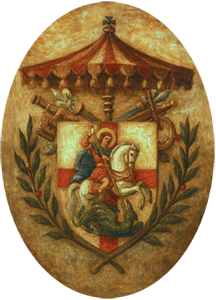
principle and historic seminary of the United Roman-Ruthenian Church
Pontifical Georgian College is a private theological institution that serves as the historic and principle seminary of the United Roman-Ruthenian Church. The College employs a Competency-Based Education (CBE) model, a proven approach designed to form clergy and lay scholars with both excellence and efficiency. Rather than binding students to inflexible schedules or uniform pacing, CBE allows each learner to progress according to demonstrated mastery. Those who arrive with prior knowledge or significant ministerial experience may move quickly through familiar material, while areas that are new, complex, or pastorally significant can be approached with greater depth and reflection. This model respects the diversity of backgrounds within the Church, honors the maturity and vocation of adult learners, and ensures that every graduate is formed not simply by time spent in a classroom, but by demonstrated competence in theology, Scripture, liturgy, and pastoral practice.
A comprehensive study of the canon law of both the Orthodox and Catholic traditions, with special focus on the Code of Canon Law of the United Roman-Ruthenian Church. Students learn how law serves the Gospel by safeguarding order, discipline, orthodoxy, sacramental validity, and pastoral care.
A priest must be a teacher of the Faith—capable of forming children, youth, adults, and new converts in the life of Christ. This course examines Christian pedagogy, catechetical methods, curriculum design, and the spiritual responsibilities of the teacher. Students learn how to teach the Faith clearly, faithfully, and engagingly.
A rigorous application of the Church’s doctrine and dogma to the moral challenges of human life. Students explore virtue, conscience, sin, law, grace, and the moral dimensions of personal, social, medical, and political issues. Through study of Scripture, tradition, and the teaching authority of the Church, seminarians learn how to form moral judgments that reflect both truth and compassion. This course equips future clergy to be wise confessors, spiritual guides, and teachers of righteousness.
A profound exploration of the theology, spirituality, and identity of the priesthood. Drawing on Scripture, the Fathers, and the lived experience of the Church, this course examines the priest as icon of Christ, steward of the mysteries, shepherd of souls, and servant-leader within the Body of Christ. Students reflect on vocation, personal holiness, pastoral responsibility, and the lifelong formation required of those called to Holy Orders. Essential for all who seek to understand—or to live—the sacred priestly ministry.
This course introduces seminarians to the theology and practical strategies of evangelism, catechesis, and the nurturing of parish life. Students examine the missionary imperative of the Gospel, the dynamics of community-building, and the challenges of evangelizing in a secular age. Through case studies and planning exercises, seminarians learn how to help parishes grow—not merely in number, but in holiness, discipleship, and unity.
A cleric must be ready to “give an answer for the hope that is in him” with both conviction and charity. This course forms students in the principles of Orthodox and Catholic apologetics, equipping them to articulate and defend the faith against modern objections, misunderstandings, and distortions. Students study Scripture, patristic arguments, classical and contemporary apologetic methods, and the importance of humility and pastoral sensitivity in every defense of truth. Emphasis is placed on clarity, confidence, and fidelity to the Apostolic tradition.
A rigorous examination of the Church’s moral teaching as applied to society, culture, politics, economics, and the modern world. Topics include human dignity, justice, war and peace, nationalism, immigration, labor, poverty, and the Christian vision of a rightly ordered society. Students learn to speak with the voice of the Church, not the world.
Building on ST201, this advanced course explores the doctrinal unity and diversity of Catholic and Orthodox theology, especially as embodied in the rites used by the URRC. Students examine patristic teaching, conciliar definitions, sacramental theology, devotion to the saints, and the understanding of the Eucharistic Sacrifice. A deep synthesis of East and West.
Required Essays for Completion of ST301 shall be on at least the following three topics:
1.The Catholic and Orthodox nature of the pre-Reformation Church or the pre-Great Schism Church. 2.Devotion to the Saints. 3.The Divine Liturgy/Holy Mass as a True and Living Sacrifice.
A practical course in the art of sacred preaching. Students study classical sermon structure, biblical exposition, rhetorical clarity, and pastoral sensitivity. Each student must preach four public sermons, receiving constructive critique to strengthen both delivery and theological soundness.
A structured examination of Christian doctrine, organized around the great themes of the Faith: God, Christ, the Holy Spirit, the Church, sacrament, salvation, and eschatology. Students learn how the Church understands and articulates revealed truth and how doctrine shapes the spiritual and moral life of believers.
A multifaceted exploration of Eastern and Western Orthodoxy as it existed before and after the Great Schism, and later before and after the Protestant Reformation. Students analyze theological development, cultural influences, political pressures, and the ongoing need for unity in truth. The course highlights the URRC’s role in preserving pre-Schism orthodoxy and apostolic catholicity.
A study of Christianity from the fall of Rome to the eve of the Reformation. Students examine monasticism, scholasticism, liturgical development, church-state relations, and the shaping of European society. Special emphasis is placed on elements preserved and continued in the URRC’s identity and patrimony.
This course examines the Apostles’, Nicene, and Athanasian Creeds as definitive statements of Orthodox and Catholic faith. Students explore their biblical foundations, historical contexts, doctrinal precision, and continuing authority. By understanding the Creeds, seminarians learn the essential grammar of Christian belief.
A hands-on introduction to the structure, theology, and ceremonial life of the Church’s worship. Students learn to serve competently at the altar as crucifer, thurifer, acolyte, and assistant at both standard and pontifical liturgies. The course includes instruction in the Divine Office and the fundamentals of ritual discipline, reverence, and sacred space.
A comprehensive study of the letters of Blessed Paul the Apostle, exploring the heart of early Christian theology: grace, faith, works, the Church, sacrament, moral life, salvation, and the mystery of Christ. Students examine Paul’s world, ministry, opponents, and enduring influence on Christian doctrine. A capstone course for New Testament theology.
A practical and spiritually grounded introduction to the work of pastoral ministry. Topics include pastoral identity, compassion, counseling basics, spiritual direction, sacramental preparation, and the daily realities of parish life. Students learn how to shepherd souls with both firmness and gentleness, always reflecting the heart of Christ.
An intensive study of Christian life from the Apostolic Age through the 5th century. Students explore persecution and martyrdom, the rise of liturgy, the growth of episcopal structures, monasticism, sacred art, and the formation of the patriarchates. Major controversies and the first four ecumenical councils are examined in depth. A crucial course for understanding what “Apostolic” truly means.
A deep theological study of the Fourth Gospel, the most contemplative and mystical of the New Testament writings. Students explore John’s stunning portrait of Christ—Logos, Light, Shepherd, Lamb, and Lord—as well as themes of sacrament, truth, love, and eternal life. This course builds directly on NT201 while introducing advanced interpretive methods.
An introductory course in the liturgical and ecclesiastical Latin of the Western tradition. Students acquire basic vocabulary, grammar, and pronunciation needed to understand and participate in the Latin liturgy and to read simple texts from the Church Fathers and traditional missals.
An exploration of the prophetic books of the Old Testament, examining how God spoke through His chosen servants to call His people to repentance, fidelity, and hope. Students study major and minor prophets, historical background, and enduring theological themes—including the prophecy of Christ and the moral voice of the Church today.
A panoramic introduction to the story of the Christian Church from Pentecost to the present. Students trace the development of doctrine, worship, the great councils, missionary expansion, schisms, reform movements, and modern challenges. This survey emphasizes the URRC’s continuity with ancient Apostolic tradition and provides essential context for all areas of ministry.
This course immerses the student in the world of Saints Matthew, Mark, and Luke. Through comparative study, literary analysis, and theological reflection, the seminarian learns how the Synoptics proclaim the Kingdom of God, portray the life of Christ, and express the apostolic faith. Students discover both the unity and unique voice of each Gospel.
A focused, in-depth study of the first five books of Scripture—the Torah, the foundation upon which all later revelation rests. Students examine themes of covenant, law, sacrifice, creation, fall, and God’s forming of His people. Special attention is given to how these books prepare for and illuminate the Gospel of Christ and the life of the Church.
This course provides a comprehensive introduction to every book of the New Testament, emphasizing how the Christian proclamation (kerygma) emerged from the apostolic witness. Students trace the development of early Christian teaching from the Gospels to Acts to the Pauline and Catholic Epistles, discovering how the Church’s message took shape and how it continues to shape us. A solid foundation for all later theological study.
A sweeping overview of the Old Testament and the Apostolic-era Apocrypha, this course invites students to encounter the drama of salvation history, from Creation to the threshold of Christ. Emphasis is placed on learning to interpret Scripture through the traditional fourfold lens: literal meaning, historical context, theological insight, and spiritual application. Through substantial reading and analysis, the student gains the tools needed to read the Old Testament as the early Christians did: as the living preparation for the Gospel.
This foundational course introduces the seminarian to the very heart of theological study: the search for God in truth, history, and personal vocation. Students explore how the Orthodox and Catholic faith arose, developed, and is lived today, with particular attention to the unique heritage and mission of the United Roman-Ruthenian Church. Through guided readings, reflection papers, and spiritual self-examination, students learn not only what the Church teaches, but how to think theologically and understand their own unfolding faith journey.